29/05/26
When our CAN DO partner came to the small western village of Solomon Islands, it was to train the community in disaster preparedness. When they left, the community had not only made important changes to mitigate floods and storms but also established a new democratic governance system.
The village in the western province of Solomon Islands has a population of around 500 people. For many years it was led by the same person – a man the villagers summed up as ‘stubborn’. In addition, the culture of the community was tainted by disagreements and conflict.
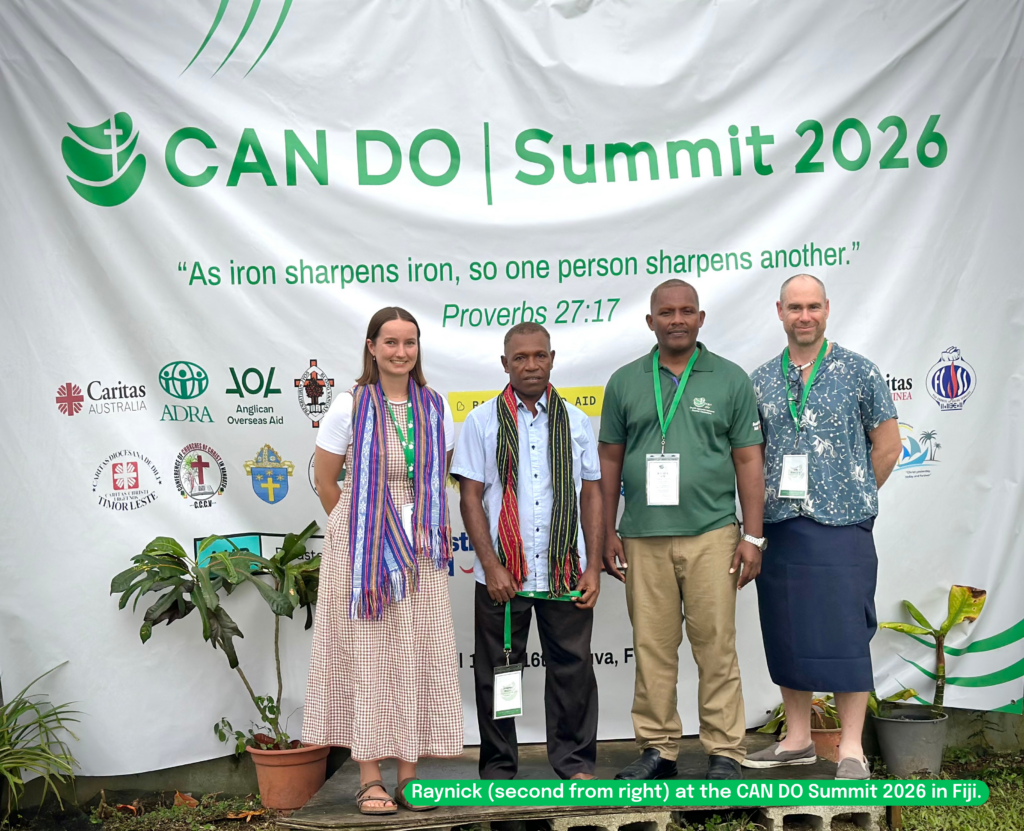
‘We noticed the lack of leadership as soon as we arrived,’ our CAN DO partner Raynick explains. ‘Key buildings needed repairs, the bush was creeping up too close to the road, and there was mistrust from the villagers about how mutual funds had been allocated.’
Our partner soon learnt this had been an ongoing issue for almost ten years. The village lacked proper community governance and change was urgently needed. One of the first things Raynick did was call a public gathering. Despite being told by the village leader that no one would come, they arranged for the church bell to ring in the meeting.
‘Everyone showed up,’ Raynick says. ‘I shared with them that what we were doing in terms of disaster preparedness needed community cooperation and togetherness. I explained that it is important to be organised - to have a committee that can assist with the programs.’
This first initial meeting was followed up with a week-long training. As it concluded, Raynick was asked to go speak with the village leader. The need for a better, democratic governance system was evident, but would the man who had been in charge for the better part of a decade agree to listen?
‘I asked him what his vision for the community was,’ Raynick recalls. ‘What kind of place he wished for his children and grandchildren to live in. Would the village survive a disaster? This really challenged him. He admitted that things had not been working well for a long time. So, I asked him what solution he suggested.’
The old leader’s response to Raynick’s question changed everything: ‘Maybe I need to step down, so someone else can take the lead. Someone I can support.’ ‘I told him I was happy to hear that’, Raynick says.
The following morning at 7.00am, the church bell once again called for a meeting. The entire community showed up. ‘We didn’t do anything to organise this,’ Raynick says. ‘It was the villagers coming together, taking ownership of the future.’
‘CAN DO has brought something important to us,’ they said. ‘This is an opportunity. How can we make the most of it?’
Soon new leaders in the form of a committee had been elected. It included both church goers and non-church goers. Women, men, old and young. That same week the community came together and started working on safe access to and from the village. They cleared important public spaces and cut down branches to avoid them falling during a cyclone. Roads were widened and wheelchair accessibility improved.
‘After we returned home’, Raynick concludes, ‘we received photos of the villagers putting gravel on their road to make it more resilient to flooding. They told me they had divided the community into three zones, with a leader for each who would assess risk and develop a plan. By the end of this year the villagers will receive a $500 award for their work, which they will use for a first responder fund.’
At a brief glance, AOA’s partner CAN DO, works with disaster preparedness and resilience. Looking closer, it is evident that the ripple effects create change far beyond storms and floods. For the village in Western Solomon Islands, it was the birth of local democratic governance.