
Mponurjie is strengthening her farm and her confidence. Through training with the Anglican Church in Mt Kenya West, she has grown in her ability to speak with others, live peacefully with family and neighbours, and put practical improvements in place on the land she stewards.
Her local table banking group is helping members invest in what matters on their farms. Community leaders meet monthly and contribute to a shared pool, with 500 Kenyan shillings set aside for emergencies.
Funds are then distributed in turn so members can finance priorities like a fodder store, fencing or useful household items. Together, the group has also bought and fattened rams, selling for profit and reinvesting the gains.
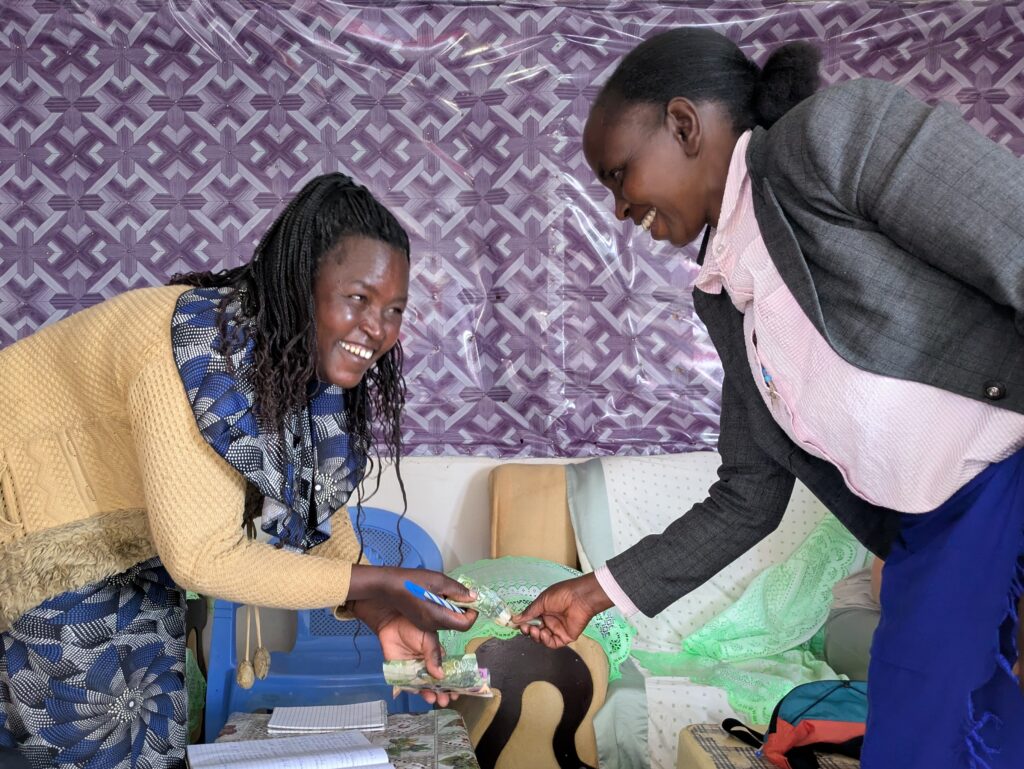
Anna shares the group’s cash with Tupesi. Savings are cycling back into farm improvements and small businesses.
On her six acres, Mponurjie has built a fodder shed and fenced her land. She has purchased a dairy goat. A small farm dam, established with county support, now provides water for trees and plants where no other source exists, and the household collects water in a tank for daily use.
These steps mean fodder can be stored for dry months, livestock can be kept safely, and trees can take root to provide food and shade.
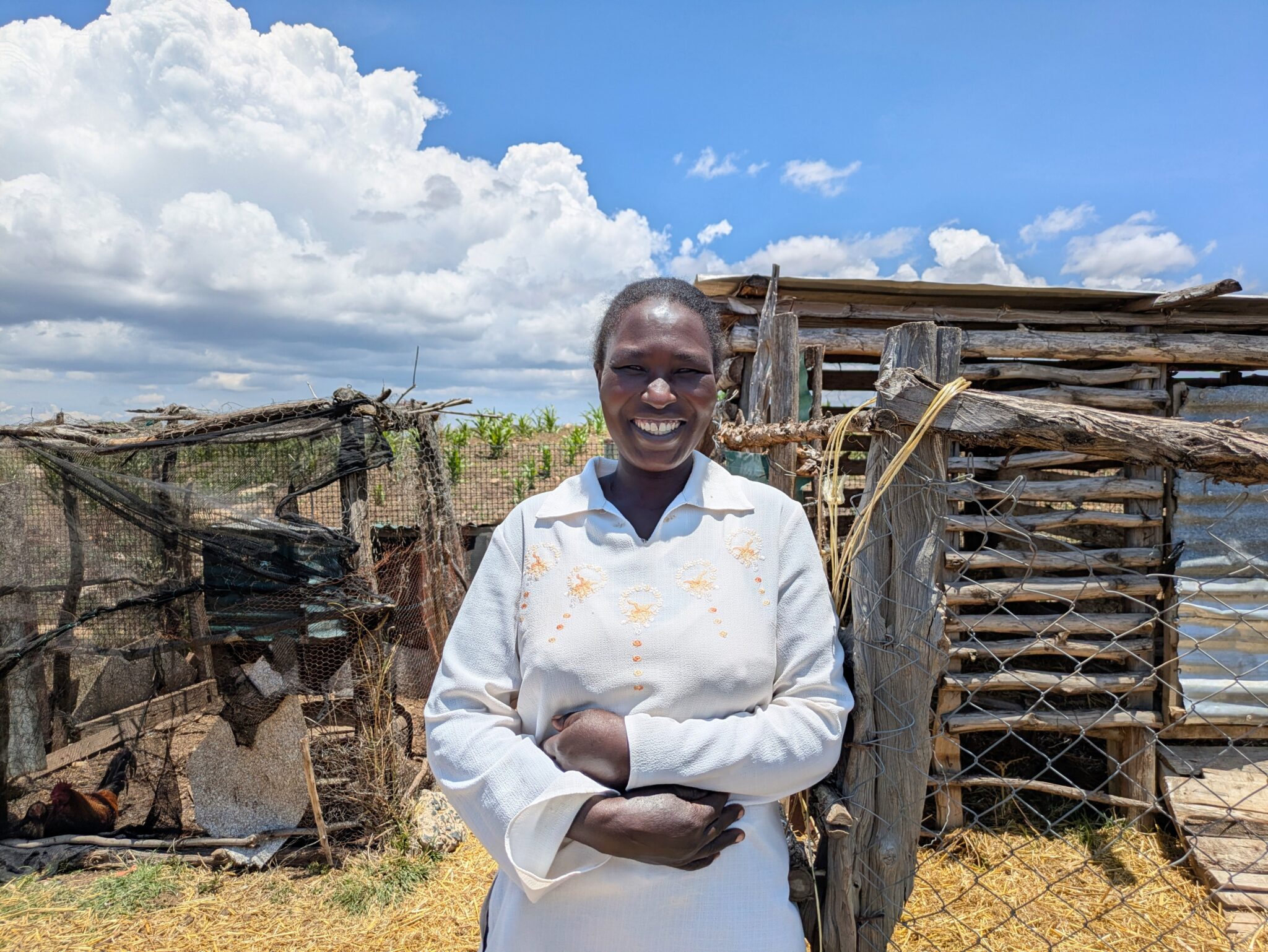
Mponurjie stands by the livestock shelter she upgraded through her group’s rotating fund.
Training from the Diocese has been central to this progress. Members have learned about pasture development, tree planting, fodder planting, conservation and water harvesting. As she looks ahead, Mponurjie plans to plant fruit trees close to home, adding food for the household and deepening the shade that protects people and animals.
This is a hopeful picture of climate resilience: water harvested, stored, and used wisely; trees planted; fodder stored; livestock managed safely; and neighbours pooling their own resources to finance what matters most.
Initiatives mentioned in this article are part of the Imarisha Maisha program, which receives funding from the Australian Government through the Australian NGO Cooperation Program (ANCP).